To combat this, the band leader must cultivate a shared vision, a common goal that each member can commit to. It could be to play at a famous jazz club, to record an album, or to simply create the best music they can. This shared goal, this collective dream, serves as the glue that binds the band, the North Star that guides them. Framework is agile with reasonable short feedback loop No matter how experienced the leader is, she might set framework boundaries and content less then optimal. Decisions made be the team might be in accordance with the framework but anyhow bring not desired consequences.
When Intuitive Decisions Work Best
Once you’ve labeled your tasks by color, these colors will directly translate to your Eisenhower Matrix. Your blue tasks are your “delegate” tasks for quadrant three, and your red tasks are your “delete” tasks for quadrant four. The best way to understand the difference between urgency and importance is to use the Eisenhower Matrix, but you may still struggle to prioritize your tasks.
When to Use SWOT Analysis
AHP shines when decisions are complex, have long-term consequences, and involve multiple stakeholders with different priorities. It decision making framework is heavily used in corporate strategic planning and government contractor selection, where a transparent and defensible process is critical. For instance, a healthcare system might use AHP to decide which new medical equipment to purchase by comparing alternatives based on criteria like cost, patient outcomes, and ease of use. The Impact Effort Matrix is a decision-making tool that helps prioritize tasks or projects based on their potential impact and the effort required to complete them. It provides a visual framework for evaluating activities to ensure that resources are allocated efficiently to maximize value.
Examples of people in the informed role:
By launching a behavioral science practice at the core of the organization, we helped one of the largest insurers in North America realize $30M increase in annual revenue. A positive duty requires you to actively perform some action to help someone in need. This relates to maleficence which compels a healthcare practitioner to help ill patients in need. https://www.maargasystems.com/2025/04/09/understanding-financial-leverage-measuring-and/ Now let us consider Person B. In this second scenario, they push Person C into the lake knowing that harm would come to them. Person B can be said in this example to have a negative duty not to harm the individual by pushing them into the lake.
Examples of people in the accountable role:
Many people struggle to understand the conceptual differences between the two but I hope to try to make them clear to the reader by way of a thought experiment. As we can see the concept of autonomy relates closely to consent and capacity. These are crucial topics to understand in healthcare whether you are a student applying to or currently Cash Flow Statement undertaking your studies or whether you are an experienced clinician.
Revising the business plan and adapting to the changes is necessary for sustainable growth.
Hear about the benefits of seeking different perspectives when making a decision.
Beneficence, or doing good, not only “requires that we treat persons autonomously and refrain from harming them, but also that we contribute to their welfare.” In other words, we must do some good for the patient.
Following this process makes sure the person understands the risks, benefits and possible consequences of different options through discussion and information sharing.
We’ve seen how each model offers a unique lens through which to view a problem, providing structure and clarity where there might otherwise be chaos.
Look no further than the past year, where FINQ’s algorithm excelled in creating alpha with objective, data-driven strategies, particularly with stocks like Comerica Inc. (CMA) and Meta Platforms Inc. (META). The AI’s analysis of various parameters for CMA led to effective trading decisions, yielding a 51.42% profit, significantly outperforming the market’s 9.35%. OneMoneyWay is your passport to seamless global payments, secure transfers, and limitless opportunities for your businesses success. How to Deposit Cash into a Business Account Without Issues Managing a business means handling money, and for many businesses, that includes dealing with cash…. Running a business means handling money wisely, and sometimes, you may need to take cash from your business…
How to Communicate and Collaborate with Stakeholders and Partners?
Creating a culture where financial information is accessible and discussions are welcomed helps build a sense of inclusion and collaboration across departments. By committing to transparency as a core value, organizations can create a space where innovation can thrive, collaboration becomes second nature and everyone feels aligned and is working toward common financial and business goals. This isn’t just about numbers; it’s about a mindset that permeates everything you do—leading to lasting financial transparency success, trust and accountability at every level of the organization. Equip your teams with the necessary tools and knowledge to understand financial data and its broader implications. It’s not about pointing fingers when something goes wrong but about empowering people to take responsibility, make informed decisions and learn from their mistakes. Doing so will foster an environment where continuous improvement is celebrated, not feared.
Stay informed with FINQ insights
For those interested in experiencing how transparency can enhance investment strategies, consider exploring FINQ’s platform. Many finance teams aim to become more strategic and guide business decisions based on key findings through transparent financial reporting. However, when data is difficult to access and analyse, this can become a challenge across the whole organisation. Encourage your employees to gym bookkeeping ask questions, express concerns, and provide feedback about financial matters. This openness helps build trust and ensures that misunderstandings or ambiguities are addressed promptly.
Adopt Transparent Accounting Tools for Real-Time Data Access
By cultivating a culture of transparency, companies can position themselves as employers of choice, ultimately leading to a more committed and skilled workforce. Financial transparency is a crucial aspect of modern economic systems, influencing both individual and organizational trust. It refers to the openness with which financial information is shared, enabling stakeholders to make informed decisions. In an era where information is readily accessible, the demand for transparency has never been more significant. Accounting standards also deter manipulative practices by defining the boundaries of acceptable methods. For example, the Sarbanes-Oxley Act in the United States was introduced to restore public trust in corporate reporting following financial scandals.
By doing so, you not only set a predictable rhythm for communication but also ensure that employees, investors, and other stakeholders remain informed and engaged.
Right now, our framework is importantly based on the crisis – whatthat experience taught us about what information was missing as the imbalances were building and then asthey imploded.
Transparent reporting also allows investors to better understand a company’s operations, management quality, and any potential risks, which can ultimately contribute to improved performance and higher stock valuations.
For nearly two decades, the national trend in the United States across all levels of government focused on creating a more open, transparent, and accountable society.
CFA Institute Research and Policy Center is transforming research insights into actions that strengthen markets, advance ethics, and improve investor outcomes for the ultimate benefit of society.
Understanding Transparency in Finance and Investment involves a clear access to financial information for all market participants.
These data warehouses present an opportunity to improve transparency in a number of dimensions.
It’s crucial to ensure that all the information you share is relevant and presented in a way that is easy to understand without using technical jargon or complex language. Encourage open dialogue by seeking feedback, addressing any questions or concerns promptly, and actively listening to the viewpoints of stakeholders. Transparency for your employees also helps them to understand the reasons behind certain decisions, leading to better morale and more motivation among team members. Employees feel more valued and engaged when they have insight into the company’s financial performance.
By embracing transparency, financial entities not only comply with regulations but also build trust, manage risks effectively, and contribute to the overall well-being of the economy.
Financial transparency promotes accountability and oversight, making it more difficult for fraudulent activities to occur.
Without these safeguards, the public loses confidence in government spending and decision-making.
By making this information readily available, organizations can enhance clarity and facilitate informed decision-making among all stakeholders.
This openness not only builds confidence but also enhances decision-making processes across the board.
Financial transparency isn’t just a fancy term in the investment world; it’s the foundation of trust and business integrity. Imagine peering into the inner workings of where and how your money is being managed or staring into an open book detailing a company’s finances in an easy-to-understand way. That’s the kind of clarity and confidence transparency brings, steering investors away from the shadows of uncertainty and costly blunders. In this article we will cover the fundamentals of financial transparency and how CFOs can begin to take steps to improve their existing reporting processes.
By offering clear terms and accessible investment options, Hive5 empowers investors to make decisions aligned with their financial goals. The Coalition urges international organizations, governments, and the financial community as a whole, to substantially improve transparency in the global financial system by taking a few clear steps to level the playing field. By prioritizing transparency, the financial industry can foster an environment of trust, leading to more robust and ethical financial markets. Innovations like open banking, where consumers can share their financial data with third-party providers, promise to increase transparency and competition in the financial services industry. A transparent financial institution will avoid conflicts of interest and ensure that all actions are in the best interest of stakeholders.
Understanding the company’s financial health allows employees to align their efforts with organizational goals, driving productivity and innovation. This alignment not only benefits the company but also enhances employee satisfaction and engagement. Moreover, financial transparency allows investors Online Accounting to assess the performance and potential of a company more accurately. Clear and accessible financial statements, disclosures, and reports enable investors to identify trends, evaluate management effectiveness, and gauge the sustainability of a business model.
A substantial amount of work is underway in the UK and internationally to provide more and betterinformation to market participants so they have the opportunity to understand the risks they are taking. Rather I want to highlight some broad principles andareas I believe would be especially useful to push further on with respect to transparency of institutions,instruments and markets. Market discipline on institutions requires anunderstanding of the risk characteristics of the instruments they hold and how institutions and instrumentsare interconnected in markets.
Maple does not have a showroom, used car lot, or individuals to sell the cars. Instead, it sells them through wholesalers or by similar arrangements in which a dealer’s profit is not intended or considered. Maple can depreciate the leased cars because the cars are not held primarily for sale to customers in the ordinary course of business, but are leased. If you are a rent-to-own dealer, you may be able to treat certain property held in your business as depreciable property rather than as inventory. See Rent-to-own dealer under Which Property Class Applies Under GDS? You cannot depreciate inventory because it is not held for use in your business.
Property Having a Determinable Useful Life
Tara Corporation, with a short tax year beginning March 15 and ending December 31, placed in service on October 16 an item of 5-year property depreciable assets examples with a basis of $1,000. Tara does not elect to claim a section 179 deduction and the property does not qualify for a special depreciation allowance. The depreciation method for this property is the 200% declining balance method. The corporation must apply the mid-quarter convention because the property was the only item placed in service that year and it was placed in service in the last 3 months of the tax year. On December 2, 2021, you placed in service an item of 5-year property costing $10,000. You did not claim a section 179 deduction and the property does not qualify for a special depreciation allowance.
What is depreciation?
It allocates $40,000 of its section 179 deduction and $50,000 of its taxable income to Dean, one of its partners. You use the amount you carry over to determine your section 179 deduction in the next year. If you are married, how you figure your section 179 deduction depends on whether you file jointly or separately. If you file a joint return, you and your spouse are treated as one taxpayer in determining any reduction to the dollar limit, regardless of which of you purchased the property or placed it in service.
How Nonprofits Can Automate Multi-Level Expense Approvals With Fyle
Real estate can also experience economic depreciation when the market value of the property decreases. Regardless of the method of depreciation employed, the Accounts Receivable Outsourcing depreciable property must have the same cost basis, useful life, and salvage value upon the end of its useful life. Generally speaking, assets that are permanent or have an indefinite useful life will not be depreciated.
For the past 52 years, Harold Averkamp (CPA, MBA) has worked as an accounting supervisor, manager, consultant, university instructor, and innovator in teaching accounting online. I recommend Bookkeeping All-in-One for Dummies for those folks new to bookkeeping. It discusses depreciation and provides depreciation examples in many sections of the book, unlike the Accounting for Dummies manual https://mozon360.com/wordpress/index.php/2022/05/10/cost-allocations-and-preparing-a-statement-of-2/ (affiliate link). Let us look at an example to understand how businesses can record the disposal.
Ultimately, it is crucial to understand all available options and choose one that best suits your needs.
Depreciation is the process of allocating the cost of an asset over its useful life.
Proper management of depreciation is essential for financial accuracy and operational planning.
If you use the property more than 50% for business, multiply the cost of the property by the percentage of business use.
This is computer software that is readily available for purchase by the general public, is subject to a nonexclusive license, and has not been substantially modified.
If you dispose of GAA property in a qualifying disposition, you can choose to remove the property from the GAA. A qualifying disposition is one that does not involve all the property, or the last item of property, remaining in a GAA and that is described by any of the following. The unadjusted depreciable basis and depreciation reserve of the GAA are not affected by the disposition of the machines. The depreciation allowance for the GAA in 2025 is $1,920 ($10,000 − $5,200) × 40% (0.40). In June 2025, Make & Sell sells seven machines to an unrelated person for a total of $1,100. The facts are the same as in the example under Figuring Depreciation for a GAA, earlier.
Double-Declining Balance
You deduct 60% of the cost ($360,000) as a special depreciation allowance for 2024. You use the remaining cost of the property to figure a regular MACRS depreciation deduction for your property for 2024 and later years. Proper asset classification is crucial for accurate financial reporting and tax efficiency. By categorizing assets correctly, you ensure compliance with generally accepted accounting principles (GAAP) and optimize your depreciation deductions. It’s important to note that improvements made to land, such as paving or landscaping, are depreciable assets.
The formula for calculating depreciation is (Asset’s cost – estimated salvage value) / estimated years of useful life. This formula is commonly used to calculate depreciation expense for a year. These methods can be used to calculate the depreciation expense for an asset, and the choice of method depends on the type of asset and the business’s needs. As assets get older, their value decreases, which is why businesses use depreciation to spread out the cost of an asset over its useful life.
The journal entry would include a debit to the lease liability for $400,000, a credit to the ROU asset for $380,000, and a credit to cash for the $50,000 penalty. The remaining $30,000 difference would be debited as a loss on lease termination, which is recognized immediately on the income statement. The liability and related expense are recognized ratably over the future service period. Changes over time are recognized as an increase in the liability and as an accretion expense.
Full lease termination options broken down by lessee and lessor
If the time until payment is short, then the effect of time value may not be material.
This means that for payments in advance, the current liability would simply be $80,000 in this example.
If a payment is made to induce such a tenant to vacate immediately, what is the appropriate period over which to spread the expense?
At the same time, X enters into a contract with Y for the right to use the building for 20 years, with annual payments of $200,000 payable at the end of each year.
When the intangible asset does not have a useful life that may be estimated with reasonable accuracy, the regulations provide for a safe-harbor amortization period of 15 years, with certain exceptions.
Although it is possible for rights to be predetermined in a contract, in this contract C does https://ruspb.info/2020/01/21/a-simple-plan-12/ not have any decision-making rights relating to the use of the asset. At the inception of a contract, an entity must assess whether the contract is (or contains) a lease. This will be the case if the contract conveys the right to control the use of an identified asset for a period of time, in exchange for consideration. However, a taxpayer may elect not to apply this treatment to all similar transactions during a tax year.
Tenant’s Right to Terminate:
One of its stores, located in a prime shopping center, is struggling to generate sales and is operating at a loss. Concurrently, the ROU asset is adjusted proportionately to the reduction in the lease’s scope. For example, if a lessee gives up 25% of its leased office space, the ROU asset’s carrying amount is reduced by 25%. The total gain on the sale of the building is $1,000,000 ($4,500,000 fair value – $3,500,000 carrying amount). Introduction The treatment of sale and leaseback transactions depends on whether or not the ‘sale’ constitutes the satisfaction of a relevant performance obligation under IFRS 15 Revenue from Contracts with Customers.
Example 3 – Partial termination based on decrease in asset size
Commercial lease terminations refer to the process of ending a contractual agreement between a landlord (lessor) and a business tenant (lessee) for the rental of commercial property. The accounting for terminating a sales-type or direct financing lease differs from an operating lease. The central element on the lessor’s balance sheet for these leases is the “net investment in the lease.” Upon termination, the primary accounting event is the derecognition of this entire net investment. The underlying asset is then brought back onto the lessor’s books and recorded at its fair value at the termination date.
By conducting a comprehensive lease portfolio analysis, reviewing lease agreements, considering the financial impact, and using technology solutions, companies can navigate this change and make informed lease termination decisions.
However, such arrangements require reliable data-sharing mechanisms between lessee and lessor.
Leases of low-value assets qualify for the simplified accounting treatment explained above regardless of whether those leases are material to the lessee.
Where available, this rule can provide accelerated cost recovery and remove some of the uncertainty that often surrounds the treatment of these payments.
Establishing strong internal controls and effective communication between finance and operations teams is essential for managing these changes efficiently.
Quantitatively, the amount of the net gain or loss recognized in the income statement due to the termination must be disclosed.
Nomos One is not responsible or liable for any claim, loss, damage, costs or expenses resulting from your use of or reliance on these resource materials. It is your responsibility to obtain accounting, financial, legal and taxation advice to ensure your use of the Nomos One system meets your individual requirements. Like many aspects of lease accounting on face value, the accounting appears straightforward. When a lease has been terminated in its entirety, the lessee should no longer recognize a right of use asset and a lease liability. When a lease termination occurs, ASC 842 mandates specific disclosures in the financial statement footnotes. The primary requirement is a clear description of the termination, including the nature and terms of the agreement.
The IRS could argue that the leases have an indefinite duration and the payment may not be amortized at all.
In such cases, a termination agreement is typically signed, outlining the terms of the lease termination.
Depreciation is over the shorter of the useful life of the asset and the lease term, unless the title to the asset transfers at the end of the lease term, in which case depreciation is over the useful life.
Lease terminations, whether due to strategic realignment, financial constraints, or operational changes, require careful planning to minimize disruption.
Transparency ensures stakeholders have a clear view of how incentives affect the lessee’s financial position and performance.
A partial termination, such as reducing leased office space, is treated as a lease modification. This requires adjusting the lease https://www.super-tour.com/advertising.shtml liability and the ROU asset to reflect the new, reduced scope of the contract, rather than derecognizing them entirely. After calculating the modified lease liability, the lessee should adjust the right-of-use asset value by a proportionate amount.
These examples underscore the importance of strategic planning, clear communication, and sometimes, creative solutions in successfully terminating leases. They also reflect the diverse strategies that can be employed, depending on the specific circumstances and objectives of the entities involved. By learning from these scenarios, businesses can better prepare for https://ruspb.info/2019/12/17/study-my-understanding-of-4/ and execute lease terminations in a way that aligns with their financial and operational goals.
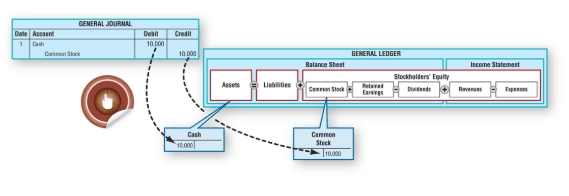
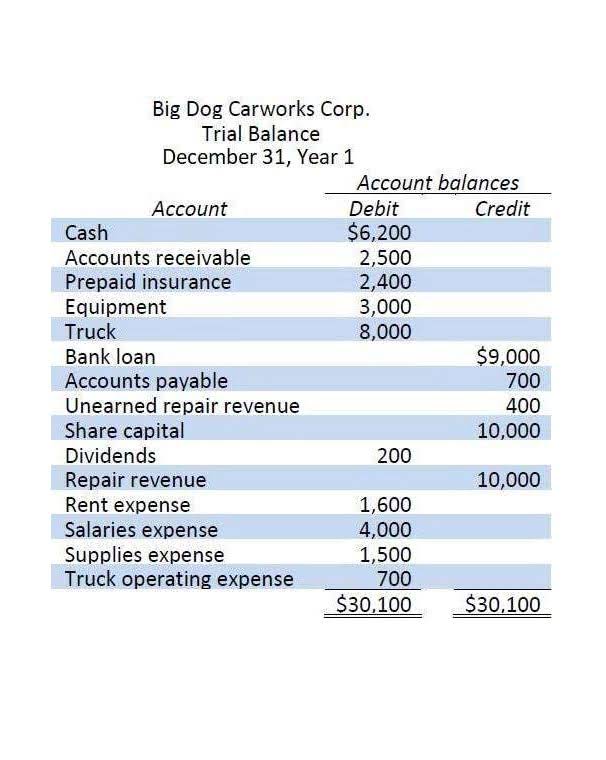
But when the business expands and grows more complex, accrual accounting is preferred. Each element of the accounting equation has its own account in an accounting system or software package, and all changes are tracked within its account. The accounting equation must stay in balance after every transaction with assets equaling liabilities plus owners equity.
Assets
Along with bookkeeping, it is imperative to compare your transactions with your bank statements every month. This will help you in discovering any missed transaction along with verifying the amounts recorded in your journal. In the long run, this habit can become highly paying and will help you in https://safetysolutions.pe/bookkeeping/accounting-for-cost-of-services-for-a-service/ keeping a better record of all your financial decisions. Bookkeeping not only keeps you in charge of your finances but also helps you take better financial decisions. Therefore, you’d do well to acquaint yourself with bookkeeping basics as an entrepreneur.
If your small business receipts are piling up, an expense tracker will help you stay organized and on top of your expenses.
Equity covers the investment or capitalization that business owners put into the business.
Without that ongoing support, your accounts payable, accounts receivable, and financial reports can fall out of sync.
When you get this principle down, the rest of bookkeeping becomes much easier.
Along with these a dedicated account for payrolls and money invested are other important account types.
What Is Performance Management? Definition, Examples, & Best Practices
When you use a spreadsheet program, you can easily get a free bookkeeping template that will help take the difficulty out of entering every transaction as it happens. Avoid legal problems that sometimes come with a joint account and simplify your life by splitting up business and personal finances. This is something that is especially important for C corporations. 2) Enjoy more efficient tax returns – Tax returns will be more accurate. You will enjoy a more streamlined record-keeping process due to identifying taxable benefits and deductions quicker and more efficiently.
Also, you should be storing every receipt and financial transaction your business conducted within the last three years.
If the thought of managing your business’s books overwhelms you, then this blog is for you!
Many small business owners do their own bookkeeping or outsource to a part-time bookkeeper.
Though it may seem intimidating, managing your company’s daily financial transactions is an essential part of your business.
Under cash accounting, you record transactions only once money has exchanged hands.
Bookkeeping for small business: Table of contents
It helps in understanding revenues, expenses, cash flows, and profitability.
Make sure to tackle your books when your mind is fresh and engaged—say, at the start of the day before you open your doors rather than late at night, after you’ve closed up shop.
Are you interested in business advising, tax preparation, bookkeeping and accounting, payroll services, training + support for QuickBooks, or retirement planning?
Once the entries are assigned to the correct accounts, you can post them to the general ledger to get a bird’s-eye view of your current cash status.
For business owners who don’t mind doing the data entry, accounting software helps to simplify the process.
We put together a list of the best, most profitable small business ideas for entrepreneurs to pursue in 2025.
Wisestamp.com is the world’s leading email signature management software – used by over 1M clients worldwide. We’re going to go over a few more bookkeeping tips for beginners that are important for any entrepreneur to know. The most common approach to accounting used in the United States, and around the world, follows the basic formula shown in Figure 9.6. For a full list of the records you should file as an entrepreneur, visit the IRS website. To better understand these concepts and how to apply them, take bookkeeping courses that will allow you to practice them. Making an effort to hone these skills gives you more confidence in your bookkeeping career.
Why do you need books and records?
Beyond mere compliance, effective bookkeeping plays a crucial role in promoting growth bookkeeping basics for entrepreneurs and success for businesses. Companies can clearly understand their revenue, expenses, and cash flow patterns by maintaining organized financial records. This knowledge empowers entrepreneurs to make informed decisions, identify potential cost-saving opportunities, and optimize resource allocation. Moreover, organized bookkeeping facilitates timely reporting, enabling businesses to meet regulatory requirements, attract investors, and secure financing. As an entrepreneur, keeping track of your finances can feel like a daunting task.
Better Accounting Will Support and Empower Your Business
At its core, bookkeeping is about recording financial data, while accounting is about interpreting financial data.
Mixing together personal and business expenses in the same account can also result in unnecessary stress when you need to file taxes or do your bookkeeping.
The criticality of categorizing and recording every transaction, however small, can’t be stressed enough.
Make sure you consider the bank charges, offerings and locations before committing to one for your business account.
The accounting equation must stay in balance after every transaction with assets equaling liabilities plus owners equity.
Familiarizing oneself with these resources lays a strong financial foundation critical for business success. Moreover, grasping accounting principles aids entrepreneurs in budgeting and cash flow management, crucial for sustaining any business. Many failed startups attribute their downfall to cash flow problems, highlighting the critical need for accounting skills that help avoid such pitfalls. Sitting down to sort through receipts, record expenses, How to Run Payroll for Restaurants or update your chart of accounts is probably the last thing on your mind. But ignoring those numbers can cost you—literally and figuratively.